Choosing the perfect fabric can be challenging, there are so many options out there. Different weights, structures, qualities; how to know which one is the right one for your project. Going to a showroom and have some professional advice can make it significant easier for you.
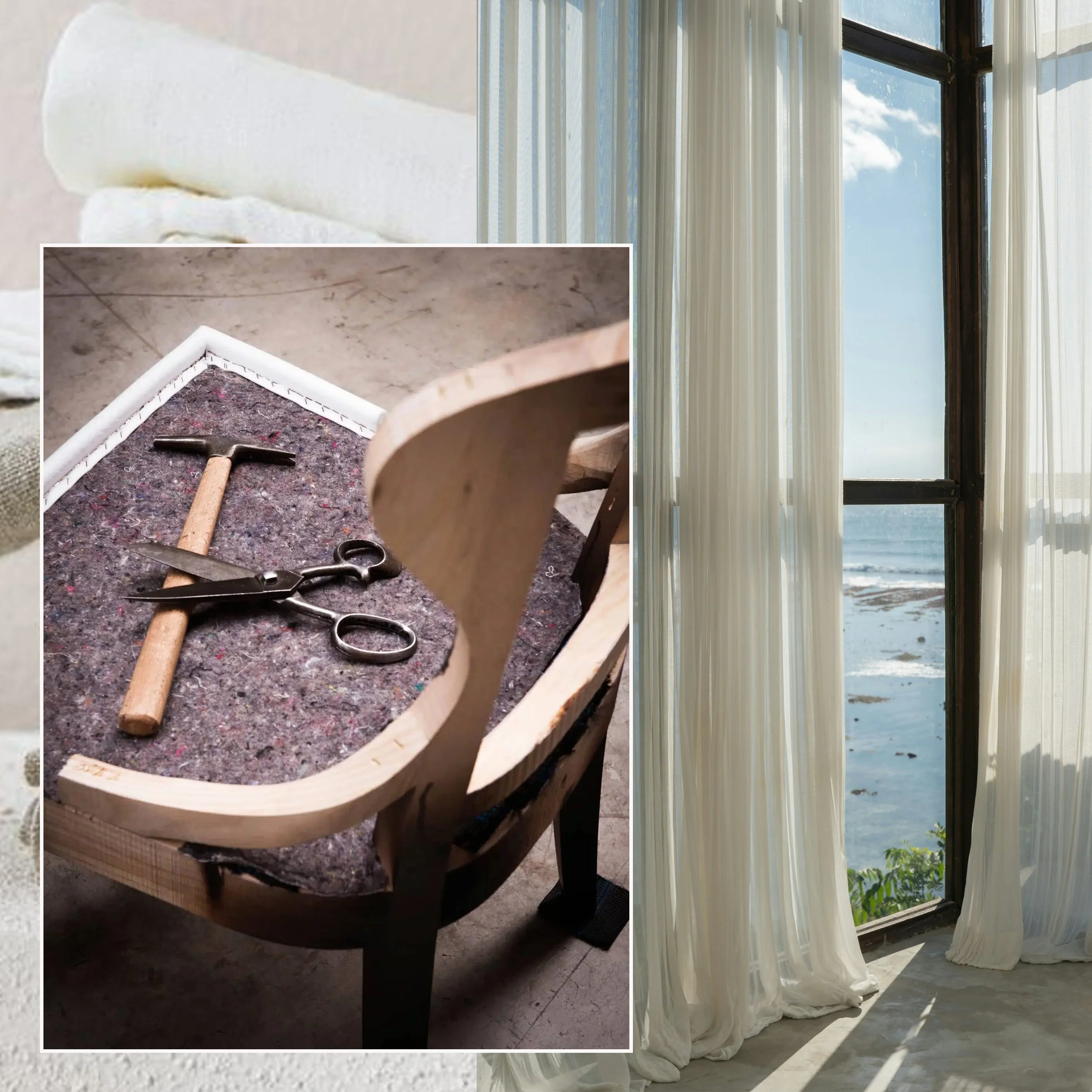
chair, ready to be upholstered via Marie’s Corner, soft curtains image by Polina Kuzovkova
We can start dividing the fabrics in two main categories: fabrics suitable for upholstery and fabrics intended for window treatments, cushions and soft furnishings. The fabrics that are fitting for upholstery can also be used for the window treatments or pillows, but the reverse is general not true. When choosing a fabric for a sofa, armchair or bed, it is important to check the Martindale rating. The Martindale abrasion rub test measures the durability of a fabric by counting how many rubbing cycles it withstands across the surface before showing signs of distress. The test score is internationally recognised. The higher the Martindale score, the more durable the fabric .
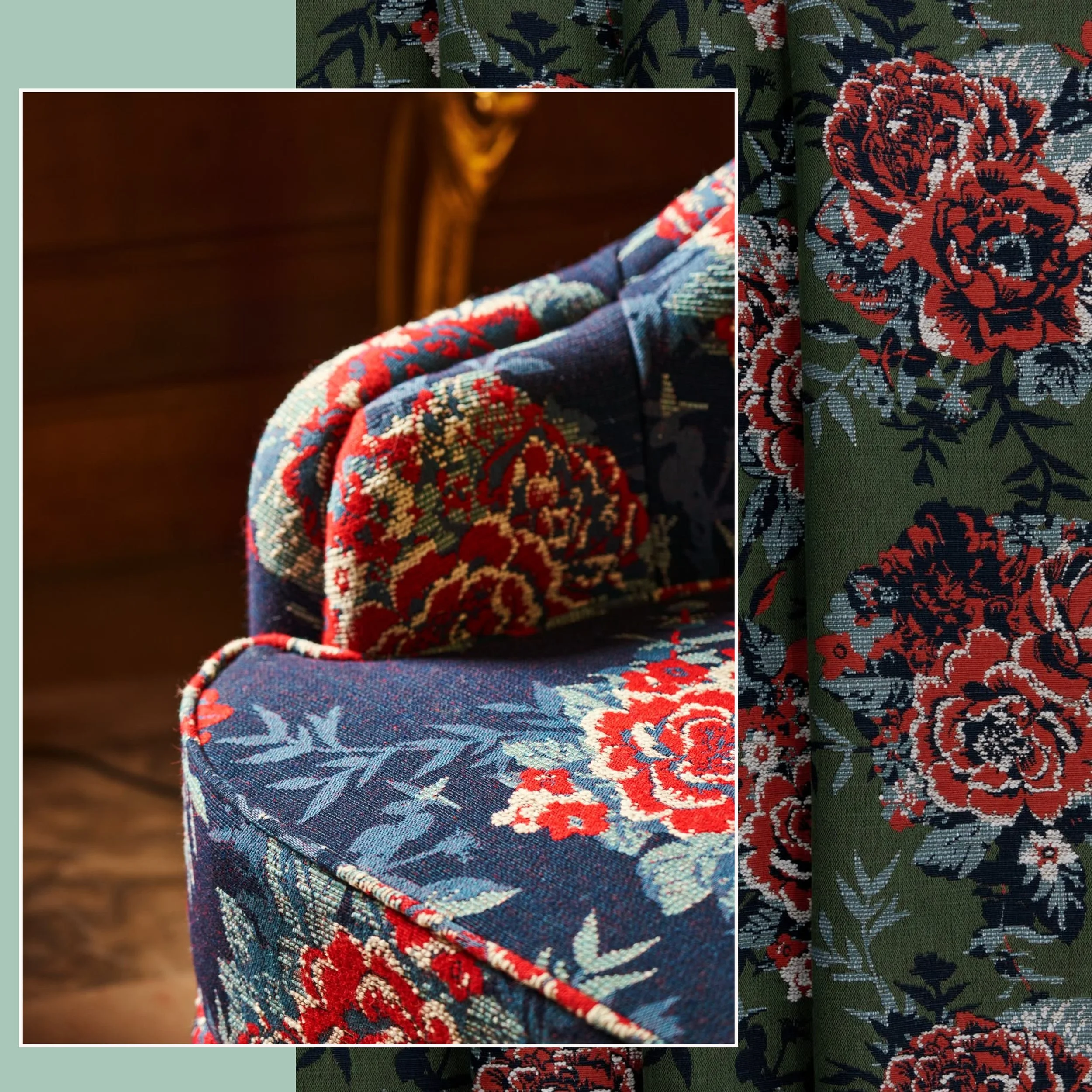
fabric Ronsard Lelièvre
I would not recommand a fabric with a Martindale rating under 20.000, maybe for an occasional chair in the bedroom. But be aware that the manufacutrer may refuse to do the upholstery with it seen it is delicate. And it is not about the weight of the fabric, it can well be that you think you ordered a heavy weight fabric and all will be fine.
Between 20.000 and 25.000 can be used for your home, suitable for everyday use.
Ordering a fabric with a Martindale between 25.000 till 30.000 assures you that you can use it for high level of everyday use.
Starting from 30.000 your fabric can be used in commercial settings. When you see a fabric with a Martindale of 100.000, you know that you have a fabric for a life time.
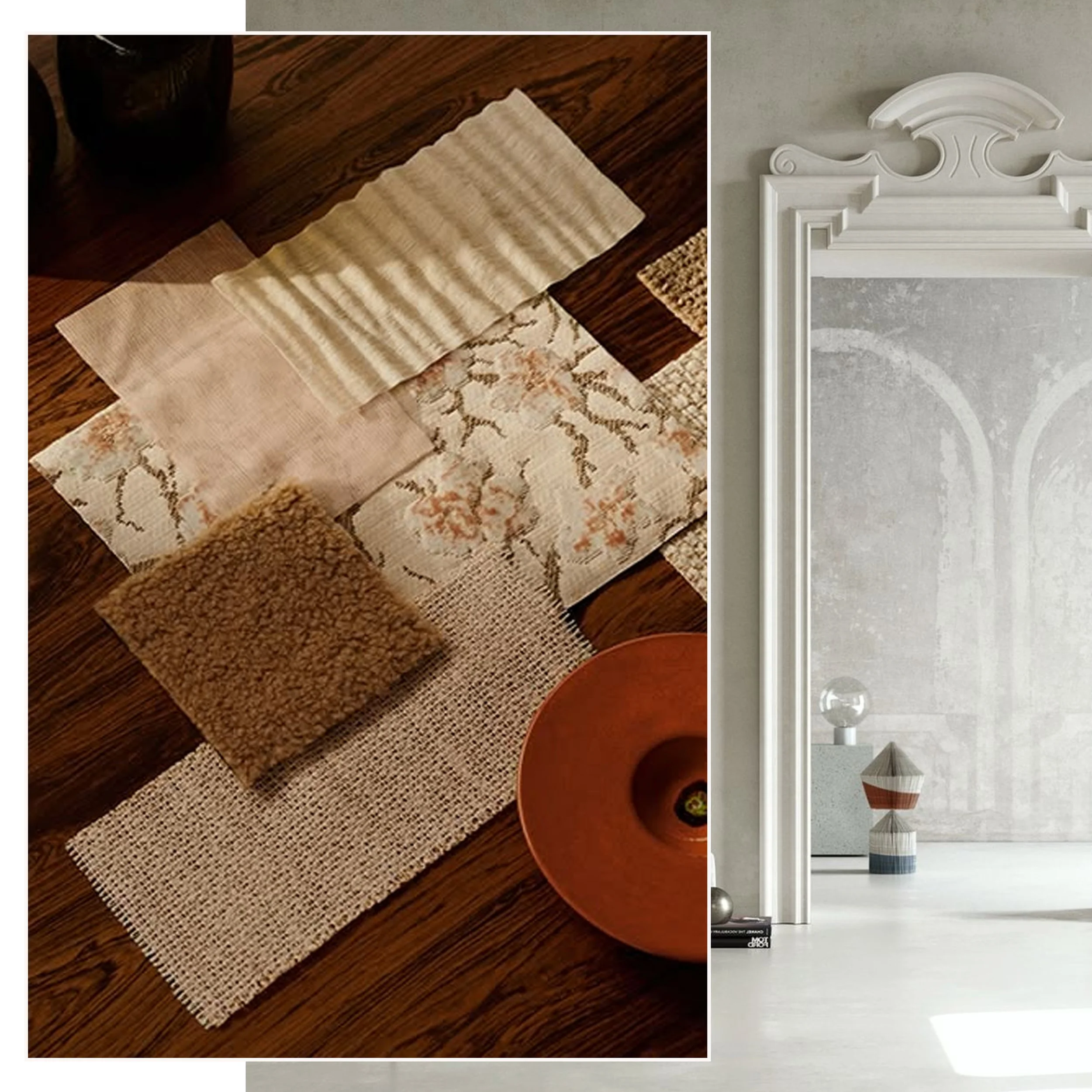
fabrics Zimmer Rhode
For an interior design project you need all types of fabrics: lighter-weight materials for the sheers, textiles with the appropriate Martindale rub count for the upholstery, and a wide selection for drapes, pillows, and other soft furnishings. Establish from the beginning a color palette and overall style for your project. Consider plain fabrics, more structured weaves, printed designs, and embroidered options. It is nice to play with different textures, plain fabrics alongside structured textiles and printed designs to add depth to the room and visual interest.
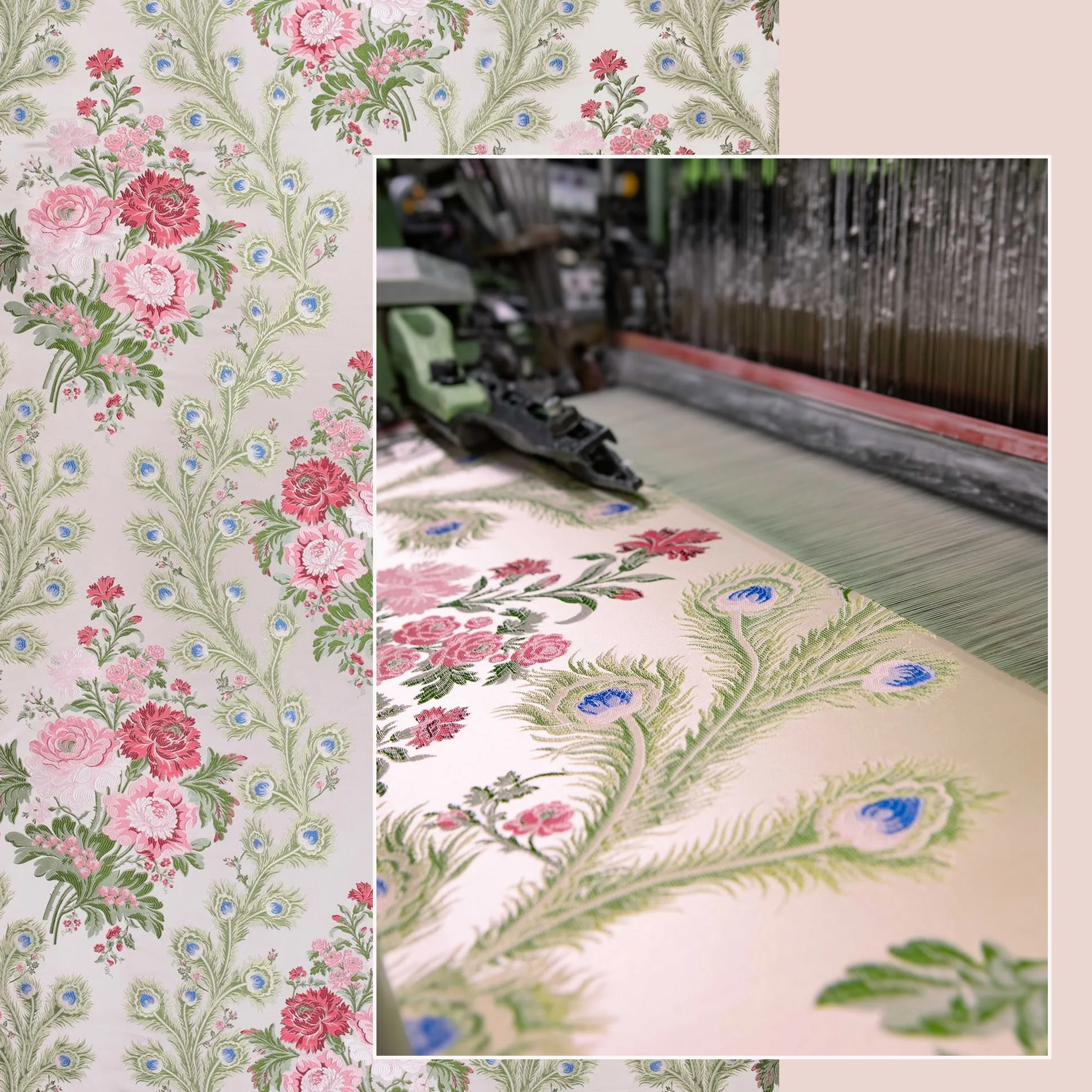
damask Plumes de Paon Lelievre
When you love an interior Marie-Antoinette would also choose, you will often see many pictures featuring sumptuous damask fabrics. So what is a damask? The fabric has a pattern woven into the fabric, instead of printed on the surface. The pattern can be either multicoloured of single tone. These textiles are woven on a jacquard loom, which allows for the intricate, reversible patterns that define authentic damask.
And we can go back to China around 300 B.C. to find the origine of damask, but it was in the Middle Ages that they developed the weaving technique, with production centred in Byzantine and across the Middle East. The name damask derives from Damascus, which served as an active trading hub on the Silk Road. Early damask textiles were hand-woven in silk. At the beginning of the 14th century, crusaders and merchants brought the fabric to Europe. Early European damask was woven on Italian draw looms and remained exclusively in silk; Venice in particular elevated it into a status symbol for royalty and the wealthy elite.
In the 19th century the invention of the French jacquard loom replaced the manuel pattern memorization with computerized punch cards and automated power. Traditionally damask was woven in silk, but today producers also incorporate other materials such as cotton, wool and synthetic fibers.
Damask is ideal for curtains, decorative pillows, upholstered wall panels. Attention when using for general upholstery, since the Martindale rub test value is typical below 20.000. In case you want to use a silk damask for curtains, you need to finish them with a lining.
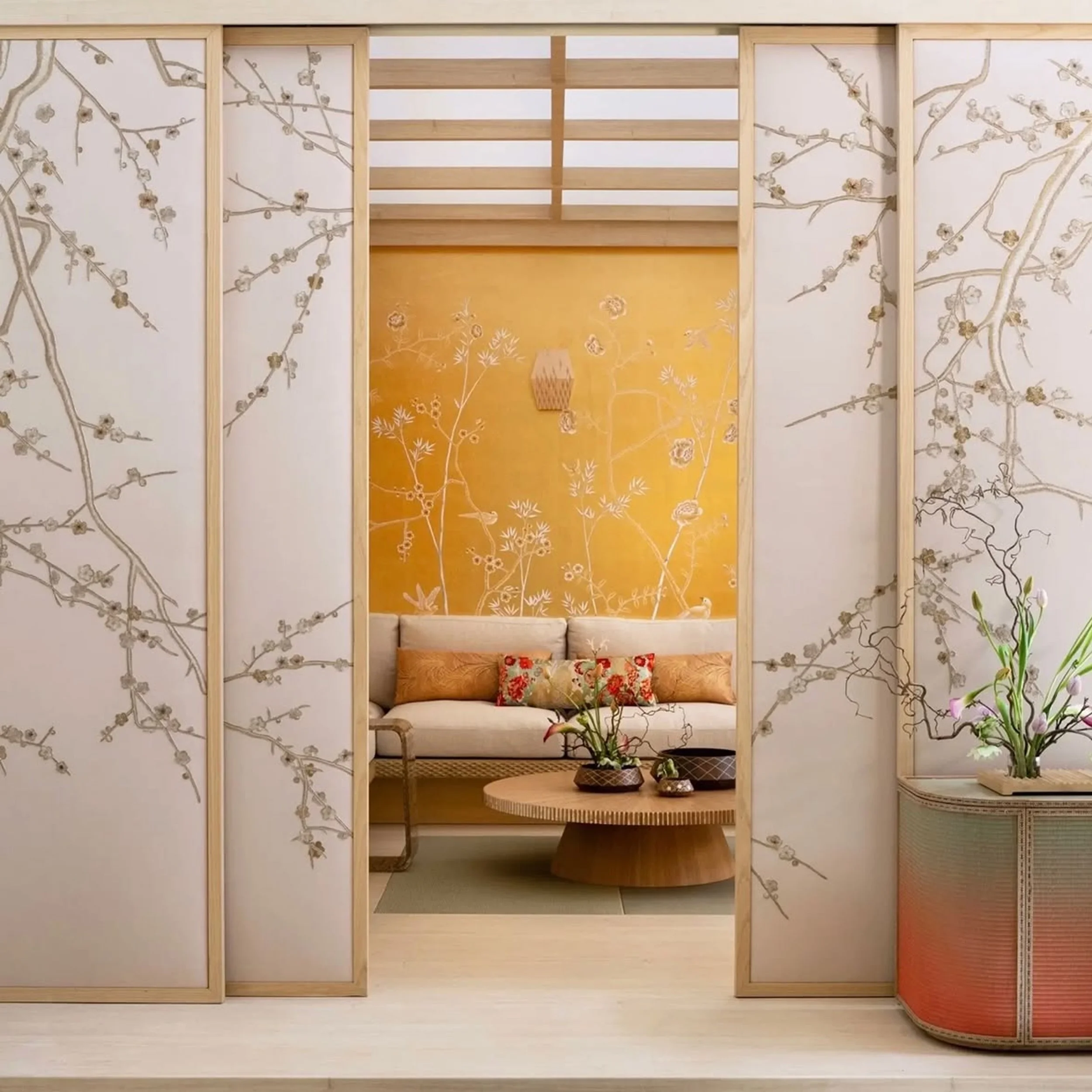
embroidered wool sateen De Gournay
Hand-embroidered fabrics are a pure luxury and not often used in interior design. They are delicate and typically come with a corresponding price tag. These fabrics can be an excellent choice for decorative pillows or to be used for upholstered panels, as shown in the image above. Using hand embroidery is like adding an art piece in the room. The embroidery will look stunning on silk or wool sateen. Combining different yarn, for example silk yarn with a metal thread, can beautifully highlight selected details.
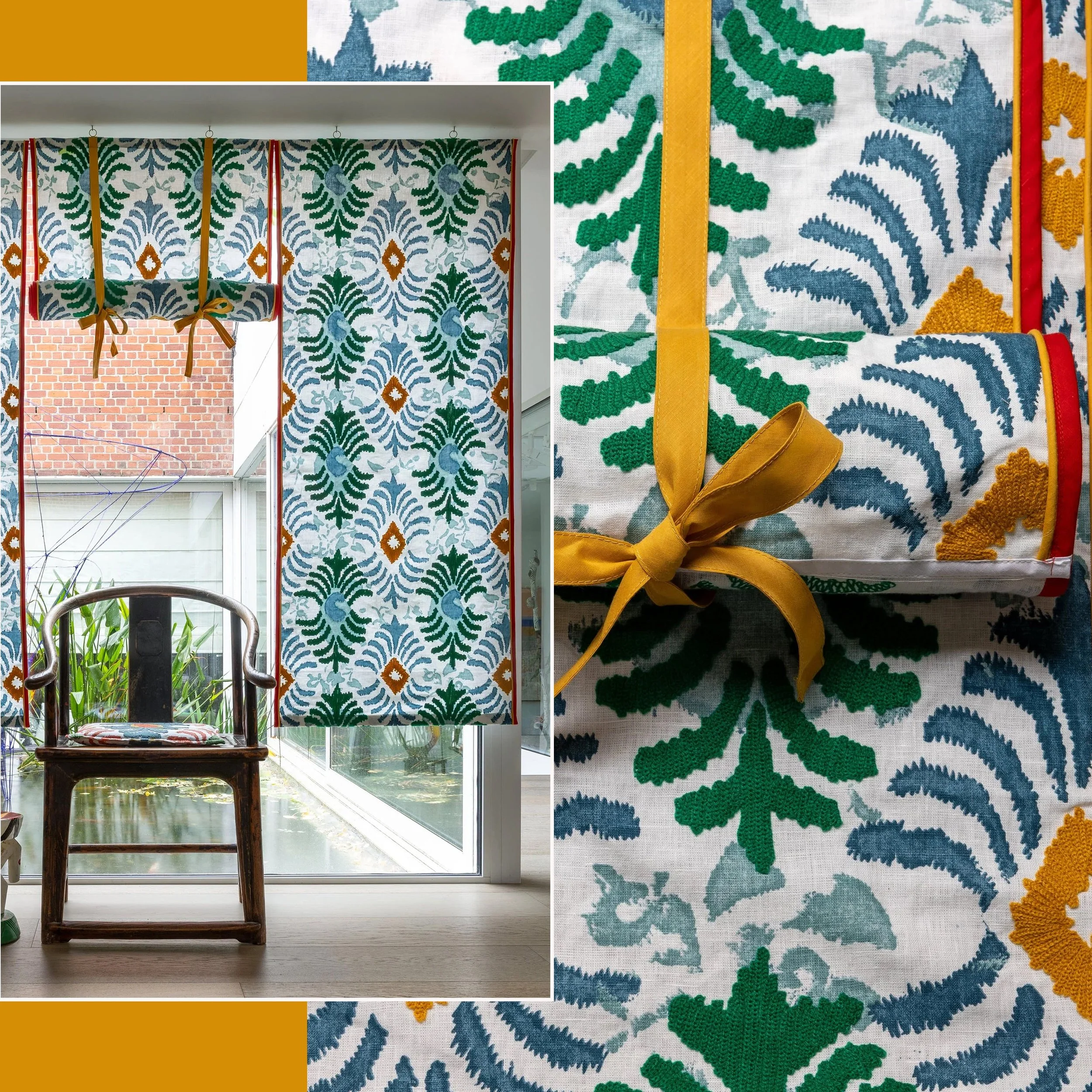
hand screen printed , embroidered fabric Youth Pierre Frey
Machine-embroidered fabrics are also stunning, a bit easier to work with, and you can find them in all different price ranges. Embroidery on a printed fabric adds a touch of something extra. You generally won’t find embroidered fabrics suitable for upholstery, but there is an ample selection perfect for curtains, pillows, and other soft furnishings. If you take a closer look at embroidered textiles you’ll discover that there are a lot of different techniques and styles.
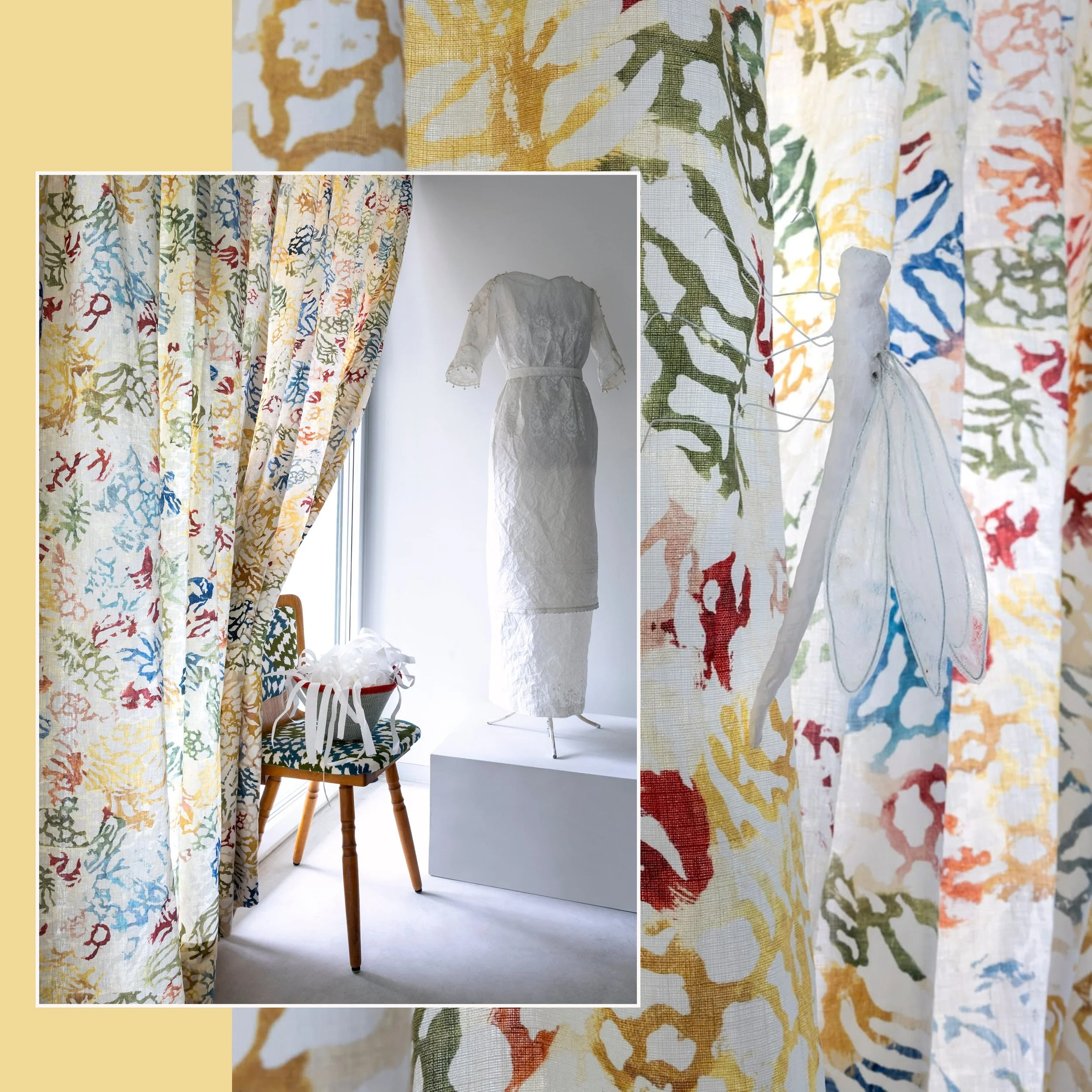
printed fabric Les Pivoines Pierre Frey
There are different techniques for printed textiles.
For block printing they use carved wooden or metal blocks for hand-stamped motifs. This is a technique, that produces slightly irregular, artisanal look, found common in the Far East, with India renowned as a specialist in block printing traditions.
Screen printing, ink pressed through mesh screens to create sharp, well-defined patterns; today it is used less often for printing long lengths of fabric, and more frequently for placing a single motif in a specific spot or for producing more artistic, graphic prints.
High-detail inkjet technology applied directly to textiles is done by digital printing, capable of producing very precise imagery and subtle color gradations; probably more than 90% of the printed fabrics we encounter are produced this way.
Printers can work on many different types of materials and qualities, so there are options suitable even for upholstery purposes. Printed fabrics look great on curtains, cushions or a striking armchair that becomes the accent piece in the living room or bedroom. For each interior design style you can find a suitable print: botanical, graphical, abstract, ethnic.
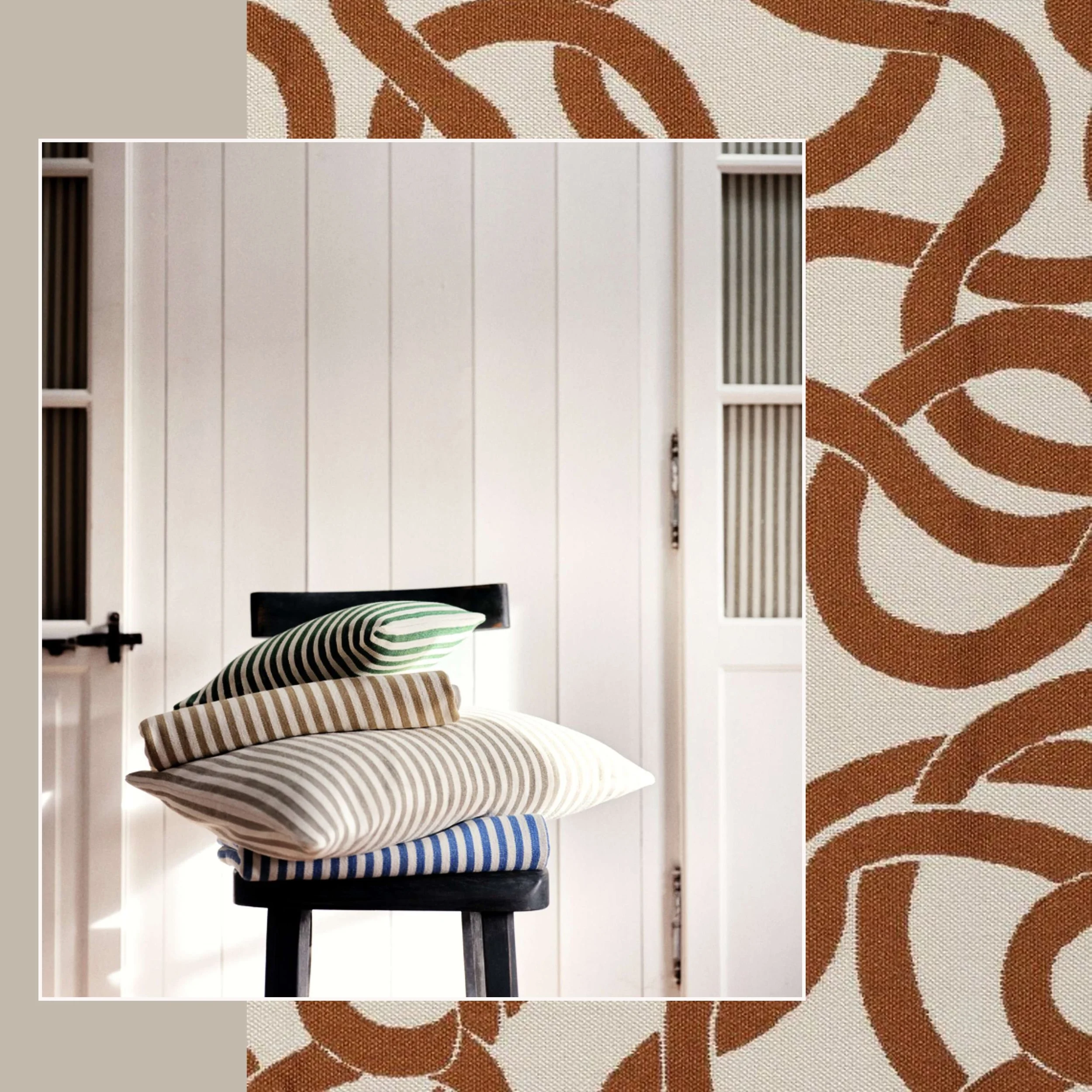
striped fabric Cape Cod Elitis - jacquard Les Rubans Le Manach by Pierre Frey
While a printed fabric begins with a plain fabric onto which a design is applied, woven and jacquard fabrics are produced by weaving with coloured yarns from the start to create a pattern, as part of the cloth. A print will appear on the face of the fabric only, where as woven textiles show the same design or a negative version of the pattern on the reverse side. Woven fabrics are more durable because the design is integral to the structure, printed motifs can fade over time. In a woven patterned fabric, the design is created through the yarn colours and weave structure rather than printed on afterwards. Woven fabrics can be beautiful for texture, depth and tonal detail, especially where the desired effect is subtle, traditional or highly tactile.
Jacquard fabric is a specific type of woven fabric made on a special loom that controls individual threads separately. While a woven fabric can have a certain structure, graphical motif, jacquard fabric can produce floral designs, damask, built right into the structure of the thread. The design won’t fade as it would do when printed, and the reverse side displays a negative image of the pattern.
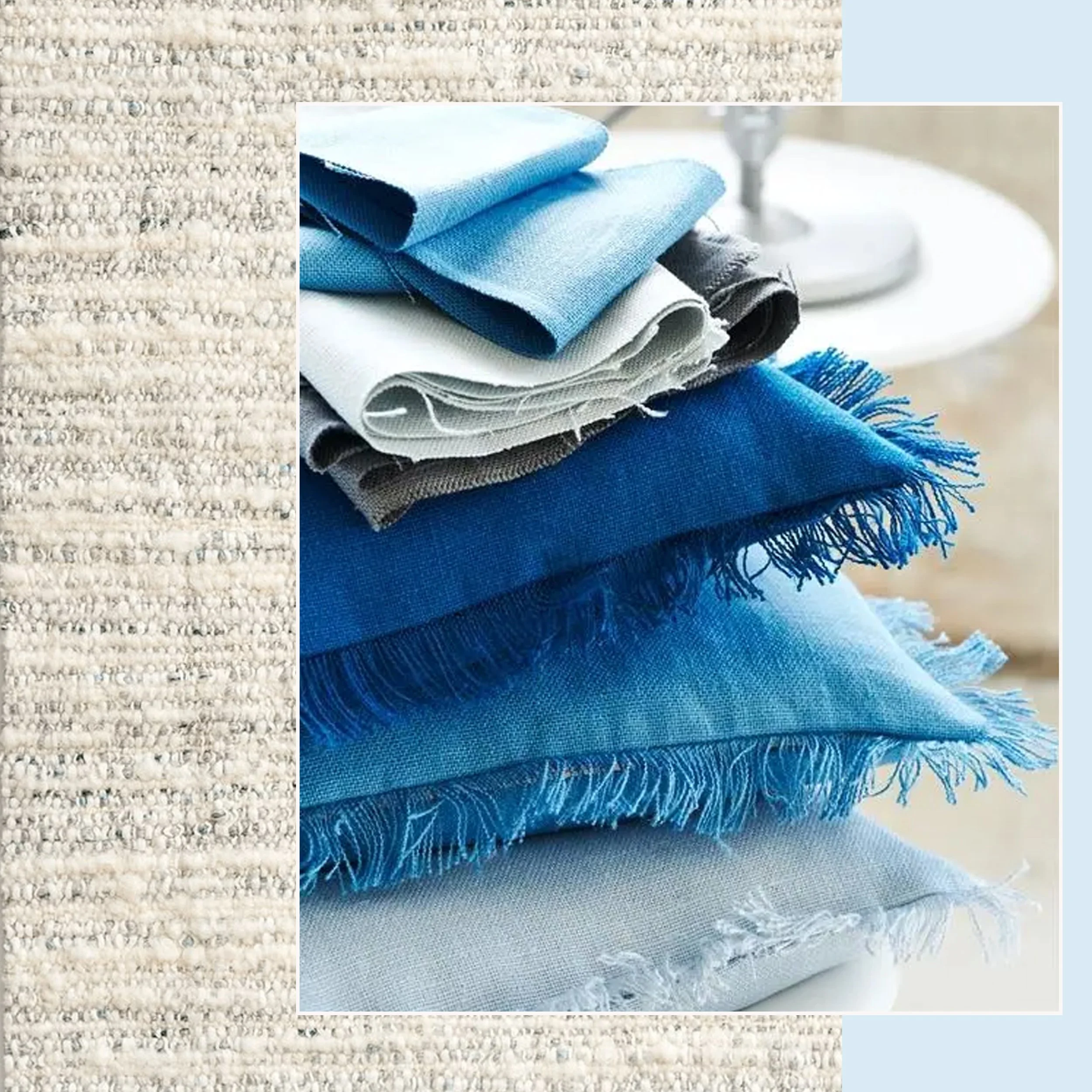
mixed natural fibres Vux Dedar - Conway linen Designers Guild
Plain fabrics are solid-coloured, unpatterend textiles that come in a wide range of qualities and blends. They are reversible, usually looking identical on both sides. Known for their durable and versatility over time. These are the basics for your interior design project, and plain fabrics are easy to combine with prints, textured weaves, or luxurious velvets. Natural fabrics such as cotton and linen are qualities tend show wrinkles more readily, which is for me a part of their beauty unless you prefer a perfectly smooth look. Wool fabrics can be beautiful, but in regions with long, hot summers they might not be the most comfortable choice. So blended fabrics are often the ideal compromise, offering the look you want with the improved performance for your living style.
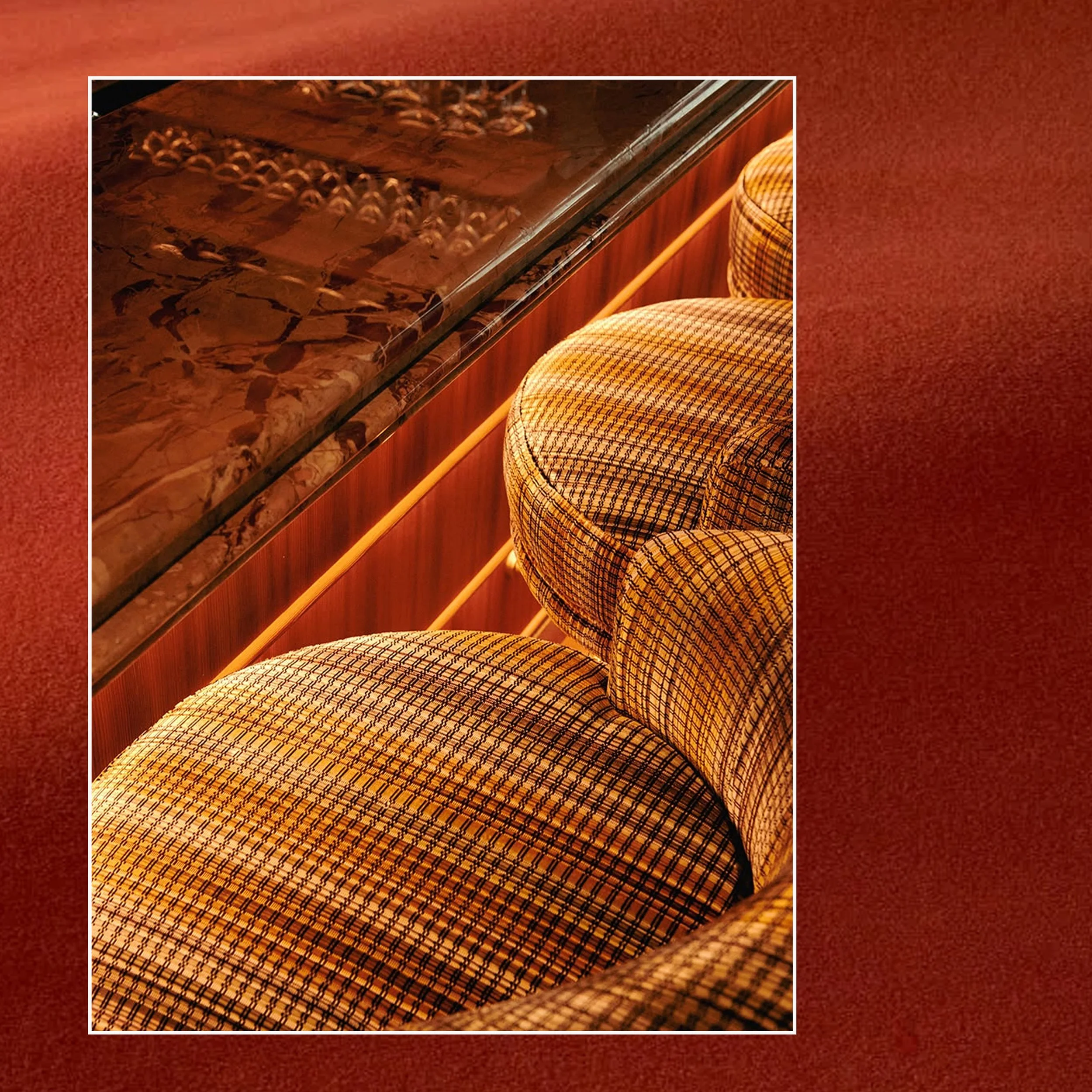
upholstered bar chairs in Hotel Hana Pierre Frey - in background stretchy wool velvet Toundra Pierre Frey
Velvet is a soft, luxurious fabric that is characterised by a dense pile of evenly cut fibres. Velvet can be made from cotton, wool, mohair or synthetic fibres, each with different weights and drape. Depending on the quality and weave, velvet can display a unique soft lustrous sheen.
The first velvets were made from silk, as such, incredibly expensive and only accessible by royal and noble classes. The origins can be traced to Baghdad around 750 A.D. and production eventually spread to the Mediterranean region and distributed throughout Europe. During the Renaissance Florence became the dominant centre of velvet manufacture and design. Velvet is woven on a special loom known as double cloth, a technique that produces two layers of velvet simultaneously.
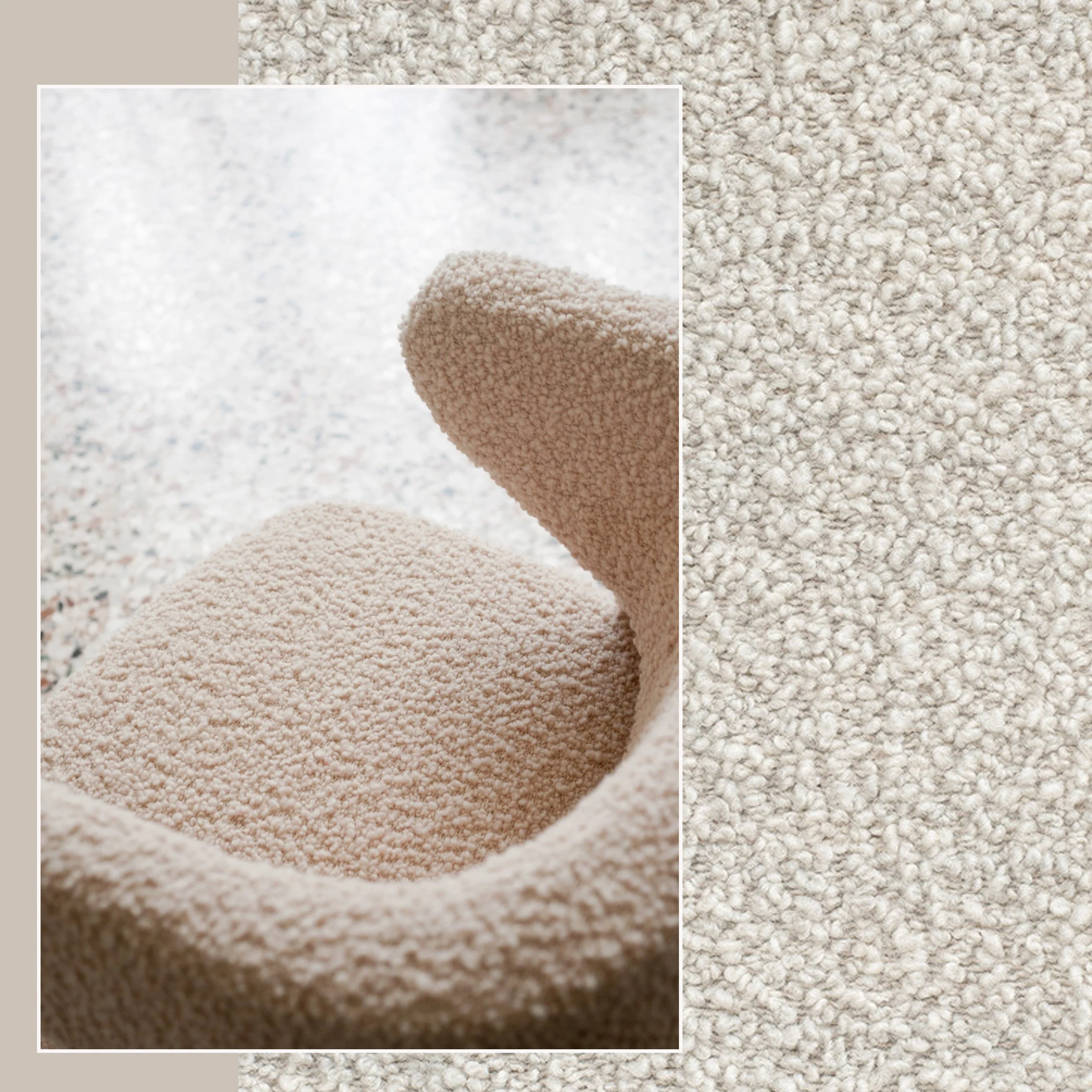
soft wool bouclé Nimbus Dedar
I also added blouclé fabric on the list, since it remains quite trendy and it appears in many current collections. It brings a modern, high-end, and stylish touch to chairs and sofas. Bouclé is a looped yarn, or the resulting fabric woven from this yarn. It looks amazing, but I would not recommend it if you have a cat or dog, because sharp pet claws can pull the loops out of place.
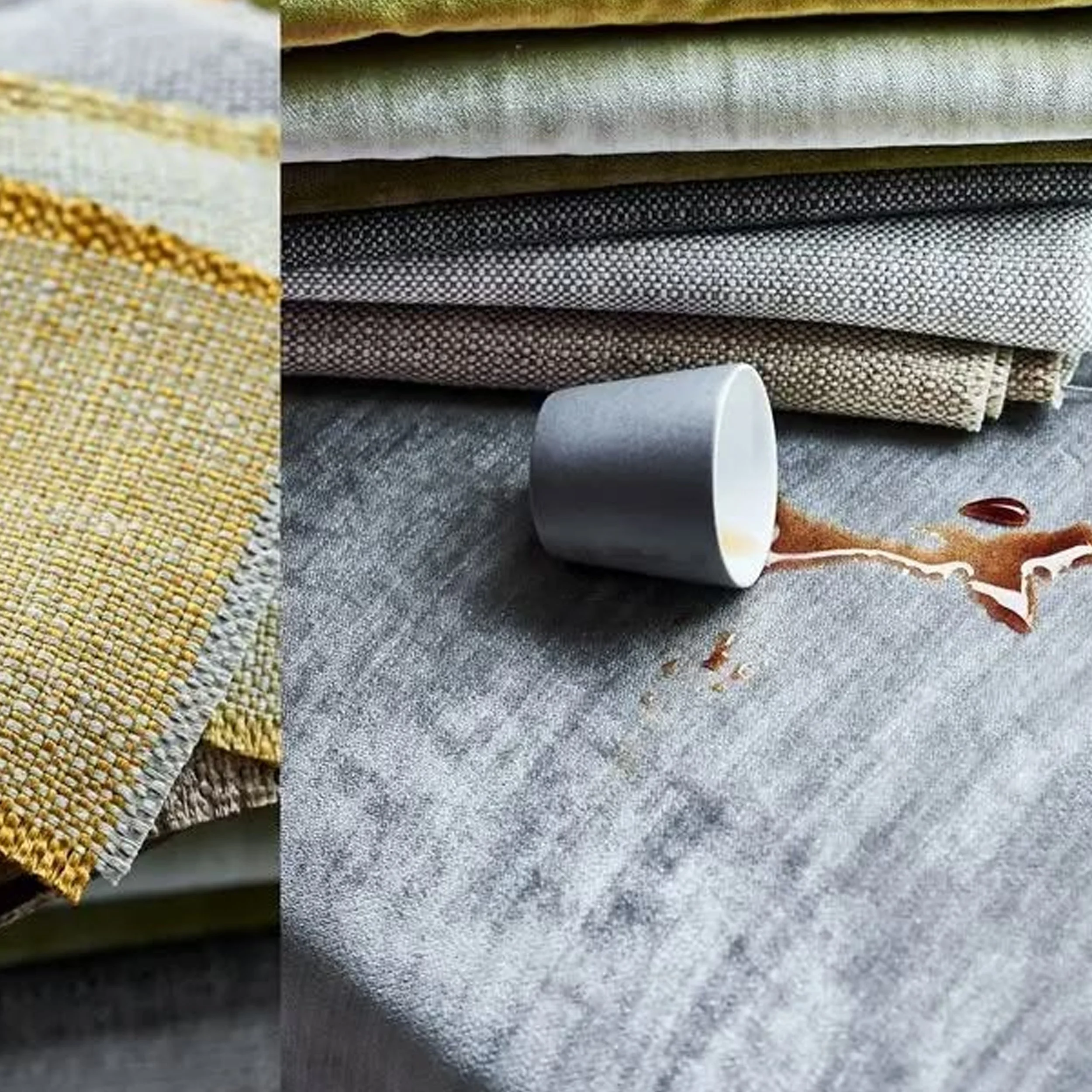
Easyclean fabrics Designer Guild
Easyclean fabrics are ideal for families with young childrenn or animals, as well for commercial spaces. Each individual thread is coated so that dirt cannot penetrate the core weave. The stain-resistant finish is permanent and doesn't wash out over time. You can choose from a wide range of fabrics treated this way: velvet, plain weaves, small bouclé and several other textures. How should you clean them when somethings falls on the fabric? Drizzle a bit of water onto the stain and either press with a clean white paper towel or gently rub in small circular motions using a soft microfiber cloth. For more stubborn marks, add a tiny bit of neutral household soap, then rinse the area with clean water. Allow the fabric to air dry naturally.
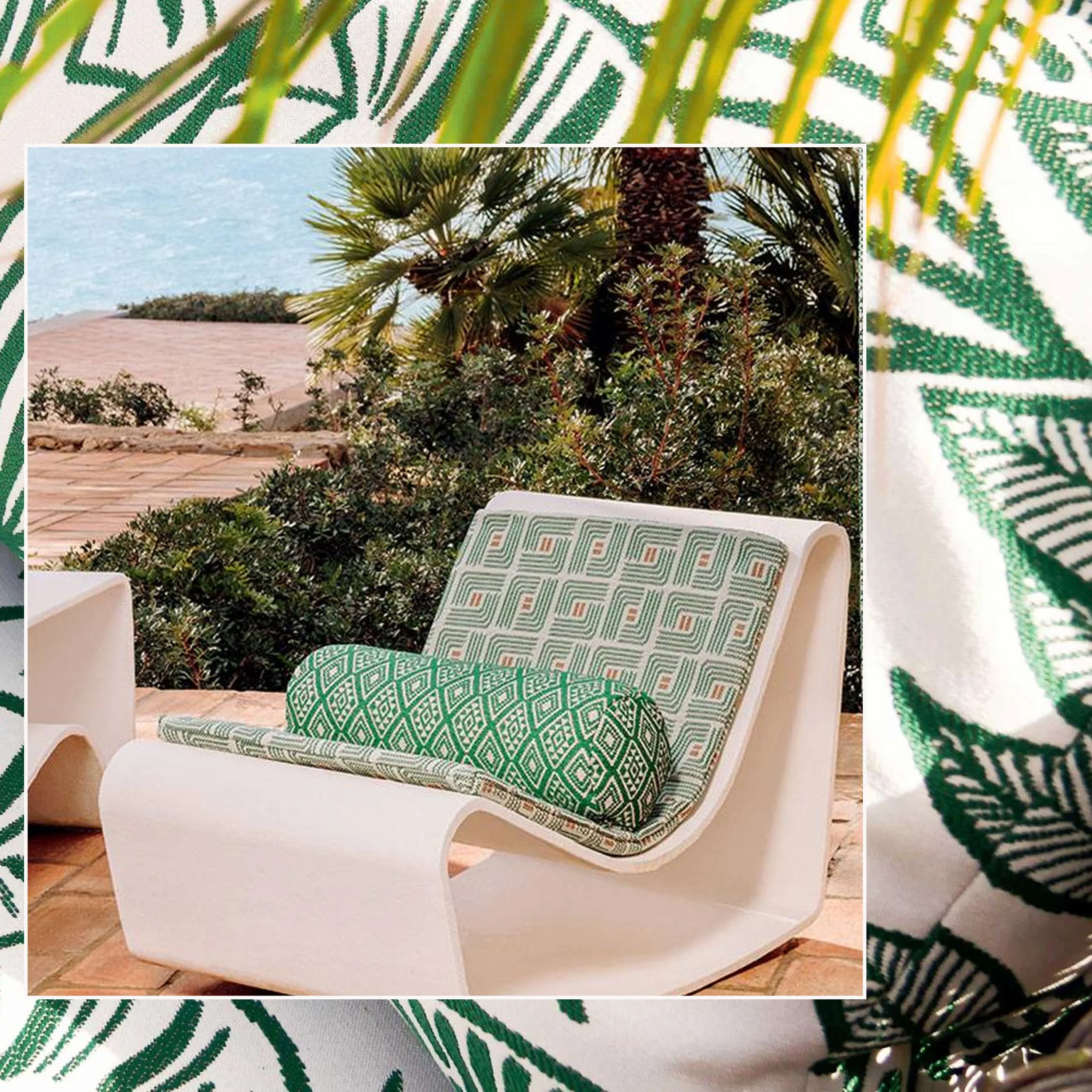
collection outdoor fabrics Faro Elitis
Producers are paying more attention these days to developing outdoor fabrics as the outdoor market becomes increasingly important. These engineered textiles are designed to resist UV fading, water, mold, and stains. Top choices include solution-dyed acrylics for supreme sun durability, olefin and polypropylene for moisture-heavy areas, and budget-friendly polyester for shaded spots. When selecting outdoor textiles, look for some key features as UV resistance to prevent the color to fade under the sun, water repellency and mildew resistance.
So when looking for fabrics for your interior design project
decide on color palette and style
combine plain weaves with textured and printed fabrics
check the Martindale rating
In case you are looking for new window treatments, find more ideas on this post
Enjoy decorating you home! In case you need advice; just send me a message.
Don’t miss any of my blog posts! Follow me on my FB page, Instagram or Bloglovin' or even better subscribe to my newsletter and get tips for travel, exhibitions, recipes and things I discovered during the week.